Deliberate Cold
Cryotherapy
Meeting the cold, returning to yourself.
Deliberate cold exposure — from cold immersion to whole-body cryotherapy — has been studied for its potential to support recovery, circulation, mood, and resilience.
Orientation
What it is
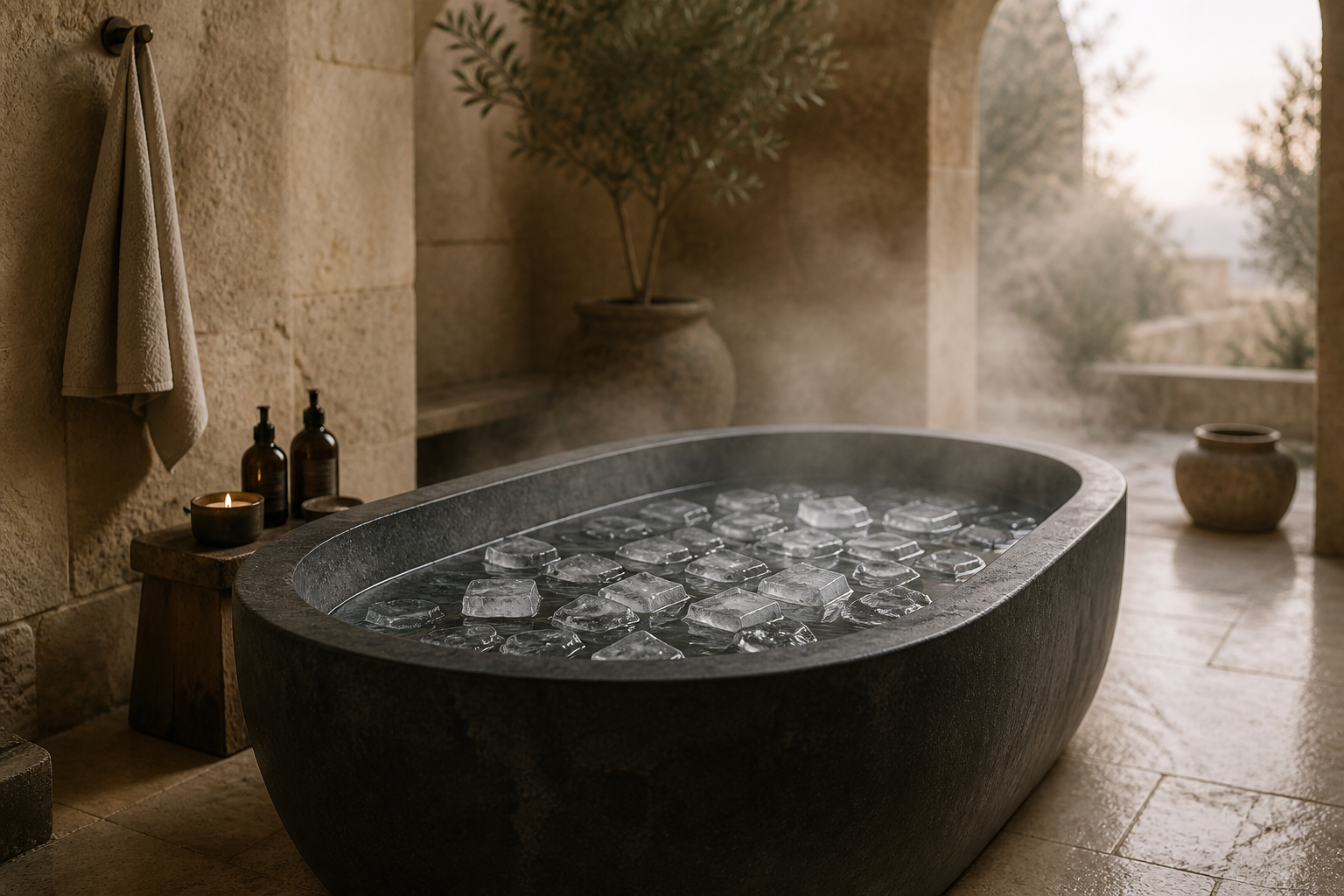
Cryotherapy refers to the deliberate use of cold — whether through cold water immersion, cold showers, or whole-body cryotherapy chambers that briefly expose the body to very cold air.
Deliberate cold exposure has a long lineage across cultures as a practice of resilience and renewal, and has found a modern home in recovery and wellbeing routines.
It is as much a mental practice as a physical one — the meeting of discomfort with calm, steady breath.
Mechanism
How it works
Exposure to cold prompts blood vessels near the skin to constrict, then dilate as you rewarm — a response that is being studied for its effects on circulation.
Cold exposure also activates the sympathetic nervous system and has been observed to increase the release of certain neurotransmitters associated with alertness and mood.
Over time, regular, gradual exposure is thought to support the body’s ability to adapt to stress — a quality sometimes described as hormesis, where a manageable stressor invites resilience.
What it may support
Potential benefits
Recovery
Widely used by athletes to support recovery and ease the sensation of muscle soreness after intense training.
Circulation
The constrict-and-rewarm cycle is studied for its potential to support healthy circulation.
Mood & alertness
Cold exposure has been observed to influence neurotransmitters linked with alertness and an elevated mood.
Resilience
Meeting a manageable stressor with steady breath may cultivate mental resilience and a sense of calm under pressure.
The research
Current scientific evidence
Cold water immersion is among the more studied recovery practices in sport, though findings on outcomes like muscle adaptation are nuanced — timing relative to training matters.
Research on mood, alertness, and metabolic effects is promising but still emerging, and much of it involves small studies or specific populations.
Individual tolerance varies greatly. The safest path is gradual, brief, and attentive — never pushing past what feels manageable.
Is it for you
Who may benefit — and who should take care
May benefit
- Active individuals seeking to support recovery after training
- People exploring practices for alertness, mood, and mental resilience
- Anyone drawn to a mindful practice of meeting discomfort with steady breath
Consult a professional first
- Anyone with a heart condition, high blood pressure, or circulatory disorder must consult a healthcare professional first
- People who are pregnant should seek medical guidance before cold exposure
- Those with Raynaud’s, cold urticaria, or cold sensitivity conditions should take particular care and consult a professional
- Never practice cold water immersion alone, and never combine it with alcohol; always prioritize safe rewarming
Good to know
Frequently asked questions
How cold and how long should I start?
Should I do cold exposure after a workout?
What is the role of breath?
Learn more
References
- Cold water immersion for recovery: systematic review — Cochrane Database of Systematic Reviews
- Cold exposure, catecholamines and mood — European Journal of Applied Physiology
References are provided for further reading and do not constitute endorsement or medical advice.
Educational disclaimer
This content is provided for educational and informational purposes only. It is not medical advice and is not intended to diagnose, treat, cure, or prevent any disease. Individual responses vary. Always consult a qualified healthcare professional before beginning any new wellness practice, especially if you are pregnant, nursing, managing a health condition, or taking medication.
Experience it through Velorae
Interested in Cryotherapy through Velorae?
We're building relationships with trusted providers of cryotherapy and other optimization modalities. Reach out to enquire about accessing this through Velorae and our partner network — we'll connect you as these partnerships are formed.
Enquire about CryotherapyContinue the return
Related from Velorae
Optimization is one thread. Let it weave into ritual, nourishment, and movement.
Restore Inner Stillness
A gentle guide to slowing down and returning to the present.
Movement as Prayer
The body's return to flow through mindful movement.
The Alchemy of the Kitchen
Nourishing the body through intentional, whole-food ritual.
The Glow State
A living library of rituals, reflections, and restorative practice.
Shop the Ritual
Candles, journals, and Connected by Design apparel for daily practice.