Photobiomodulation
Red Light Therapy
Light as nourishment for the cell.
Red and near-infrared light have been studied for their potential to support the mitochondria — the energy centers of the cell — inviting a gentle return to vitality, recovery, and radiant skin.
Orientation
What it is
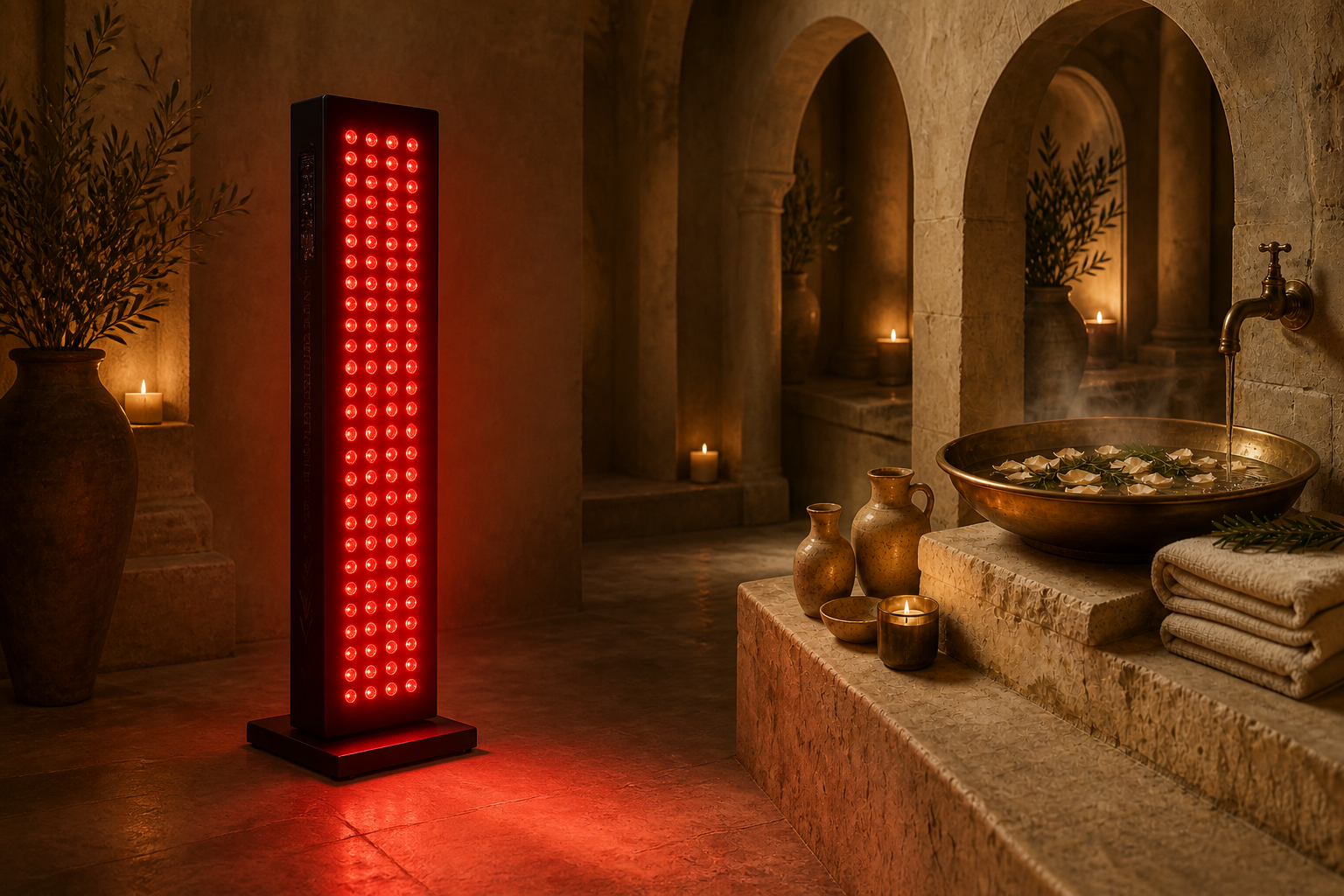
Red light therapy — also called photobiomodulation (PBM) or low-level light therapy — is the intentional use of specific wavelengths of red (typically around 630–660 nm) and near-infrared (around 810–850 nm) light delivered to the skin.
Unlike the ultraviolet light that can damage skin, these longer, gentler wavelengths are non-thermal and are being studied for how they may interact with the body at a cellular level.
It is used at home through panels and handheld devices, and in wellness and recovery studios, as one supportive practice within a broader lifestyle.
Mechanism
How it works
Red and near-infrared wavelengths are absorbed by a light-sensitive enzyme in the mitochondria called cytochrome c oxidase. Researchers believe this absorption may help support the mitochondria in producing ATP — the primary energy currency of the cell.
This is thought to influence cellular signaling and may contribute to the way tissues respond to stress and everyday wear. Emerging evidence suggests it may also play a role in modulating inflammation and circulation locally.
Because near-infrared light penetrates more deeply than visible red light, panels often combine both wavelengths to reach the skin surface and the tissues beneath it.
What it may support
Potential benefits
Cellular energy
Studied for its potential to support mitochondrial function and ATP production, which underpins how energized and resilient we feel.
Recovery & muscle comfort
Commonly used to support recovery after movement and to ease everyday muscle fatigue as part of a training routine.
Skin health
Has been studied for its potential to support collagen activity, skin tone, and a healthy, radiant complexion.
Inflammation & comfort
Emerging evidence suggests it may help modulate localized inflammation and support physical comfort.
Sleep & rhythm
Some people use warm red light in the evening as a gentle, low-stimulation alternative to bright screens before rest.
The research
Current scientific evidence
Photobiomodulation is one of the more actively researched wellness modalities, with a growing body of laboratory and clinical studies exploring skin, recovery, and tissue outcomes.
Reviews suggest that results depend heavily on dose — wavelength, intensity, duration, and distance from the device all matter, and more is not always better.
Much of the research is still early-stage or conducted on small groups, so findings are best understood as promising rather than definitive. Quality varies between consumer devices.
Is it for you
Who may benefit — and who should take care
May benefit
- People seeking to support post-exercise recovery and everyday muscle comfort
- Those interested in supporting skin tone, texture, and a healthy complexion
- Anyone exploring gentle, non-invasive practices to support energy and wellbeing
Consult a professional first
- Anyone who is pregnant or nursing should consult a healthcare professional first
- People taking photosensitizing medications, or with photosensitive conditions such as lupus, should seek medical guidance
- Those with a history of skin cancer or active skin lesions should consult a dermatologist before use
- Always protect the eyes and follow device manufacturer guidance
Good to know
Frequently asked questions
How often is red light therapy typically used?
Is it the same as a tanning bed?
Can I combine it with my skincare ritual?
Learn more
References
- Photobiomodulation mechanisms and applications — Hamblin, M.R. — AIMS Biophysics (review)
- Low-level laser (light) therapy in skin health — Seminars in Cutaneous Medicine and Surgery
References are provided for further reading and do not constitute endorsement or medical advice.
Educational disclaimer
This content is provided for educational and informational purposes only. It is not medical advice and is not intended to diagnose, treat, cure, or prevent any disease. Individual responses vary. Always consult a qualified healthcare professional before beginning any new wellness practice, especially if you are pregnant, nursing, managing a health condition, or taking medication.
Experience it through Velorae
Interested in Red Light Therapy through Velorae?
We're building relationships with trusted providers of red light therapy and other optimization modalities. Reach out to enquire about accessing this through Velorae and our partner network — we'll connect you as these partnerships are formed.
Enquire about Red Light TherapyContinue the return
Related from Velorae
Optimization is one thread. Let it weave into ritual, nourishment, and movement.
Restore Inner Stillness
A gentle guide to slowing down and returning to the present.
Movement as Prayer
The body's return to flow through mindful movement.
The Alchemy of the Kitchen
Nourishing the body through intentional, whole-food ritual.
The Glow State
A living library of rituals, reflections, and restorative practice.
Shop the Ritual
Candles, journals, and Connected by Design apparel for daily practice.